


I turned 33 this week, which is strange because I’m fairly certain I was 27 about three months ago.
Birthdays have always felt like slightly arbitrary accounting periods to me. There is no meaningful difference between 11:59pm on August 5th and 12:01am on August 6th, and yet suddenly you’re expected to conduct an annual review of your existence.
So I did.
The conclusion is that very little of my life looks the way I once imagined 33 would look.
Some of it is considerably better. Some of it is considerably more complicated. And some of it is still very much under construction.
THIRD, conveniently, falls into all three categories.
I started it with a relatively simple frustration: I didn’t understand why so much of the world I came from, travelled through and was curious about appeared mostly as a footnote in global business media.
A company building something extraordinary in Riyadh, Jakarta or Almaty was apparently an “emerging markets” story. Emerging into what, exactly? So we pointed the camera in the other direction, that was the thesis, though the reality of building it has been considerably less elegant.
For most of my career, media has been measured by audience: how many people watched, followed or opened the newsletter. Those numbers matter, and I would be lying if I pretended I don’t refresh them, but reach is a remarkably crude measure of influence. We’ve had founders raise through our Dealflow newsletter and companies raise more than $2 million after an investor discovered them through a 60-second video on our platforms.
Ten million people can watch something and nothing happens. Sometimes the right person watches and a company gets funded. The internet made distribution abundant. What remains scarce is consequential attention: reaching the right person, at the right moment, with enough context to act.
I suspect that distinction will define the next generation of media companies.
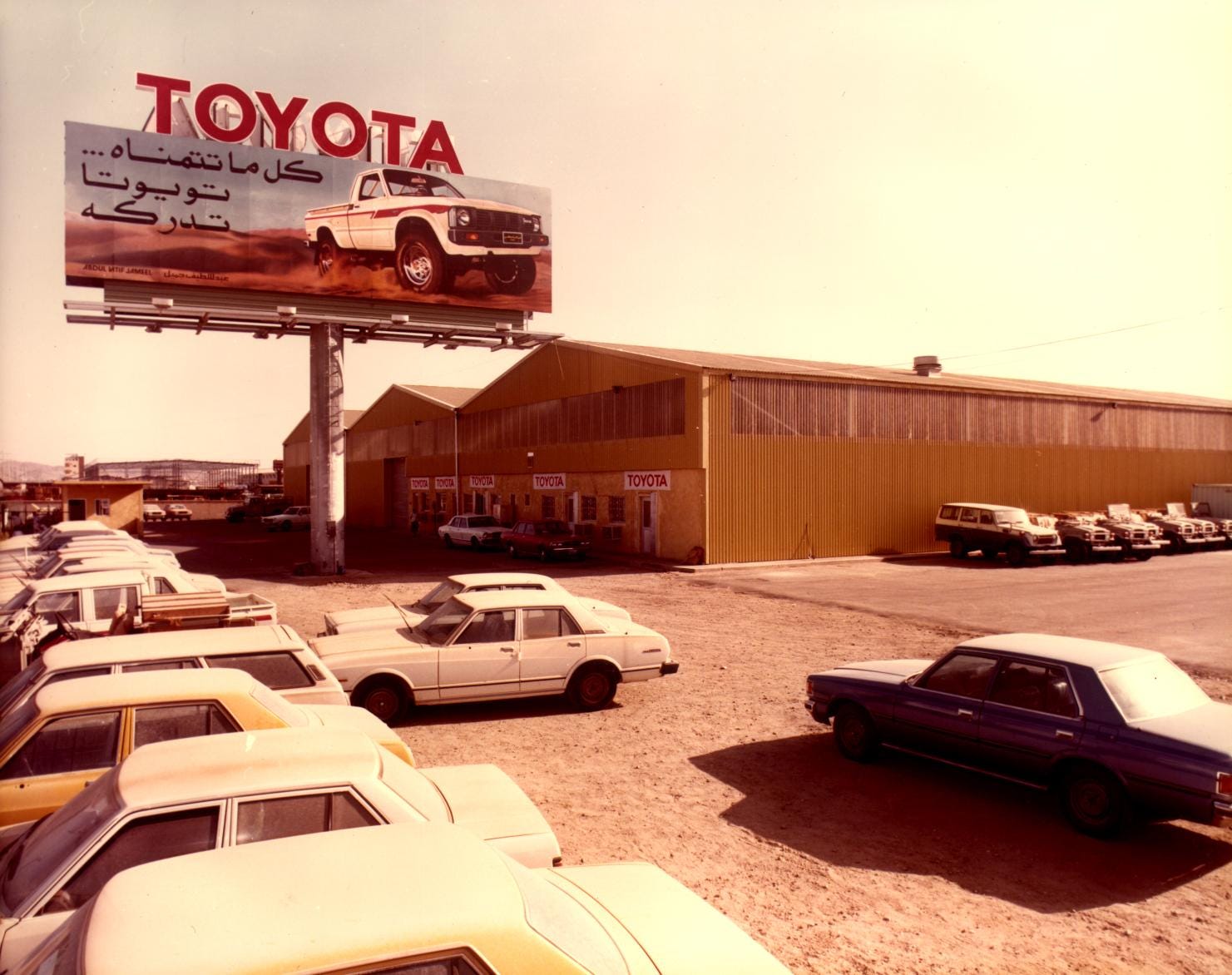
I’ve also spent quite a bit of time in Saudi Arabia recently, which has sent me down an unreasonable number of rabbit holes: why Land Cruisers became ubiquitous in the Kingdom, how Saudi scholarships helped shape its modern economy, the history of Aramco compounds, the Red Sea’s transformation, the story of the Arab Maradona, and honestly so much more.
There are worse hobbies, although arguably more sociable ones.
But Saudi Arabia is particularly interesting to me because so much is changing at once, which makes it possible to see the normally invisible machinery of an economy, capital, policy, culture, technology and people, moving in real time. That is at its core what my show In Plain Sight is about: starting with something ordinary and following it until you understand something much bigger about how the world works.
That curiosity is increasingly taking us into places beyond traditional business, too.
Last week we launched Creator Games, our bet on the next generation of creator-entrepreneurs. I think we still talk about creators as people who monetise attention, when the more interesting shift is people using that attention to build actual companies, effectively starting with distribution and working backwards. Issue two is out this week, looking at the people, platforms and businesses emerging around that shift. You’ll get to meet our first cohort very soon, so make sure you’re signed up.
And because apparently I’m incapable of staying in one intellectual lane, I also made something this week that doesn’t quite fit neatly into any THIRD category. It asks a question I’ve been thinking about for a while: did the internet kill elsewhere?
I’m interested in these questions even when they don’t have an obvious business lesson attached. Maybe especially then. I’m still figuring out exactly where they belong, which seems appropriate given the rest of this letter.
Perhaps that is my actual conclusion from this year’s arbitrary annual review.
At 33, I have fewer answers than I thought I would. THIRD has a bigger impact and is stranger than the company I originally imagined.
But there is something reassuring about that. We spend so much of our twenties trying to construct a coherent life: the career should make sense, the company should have a clear roadmap, the milestones should arrive roughly when expected. Then you get a little older and realise that most interesting things are built considerably less neatly.
Companies pivot, countries reinvent themselves and people do too.
Some of it is considerably better. Some of it is considerably more complicated. And some of it is still very much under construction.
And I think I’m okay with that.
See you next week,
Chaymae
Subscribe | Advertise | Apply for funding | Watch | Follow