


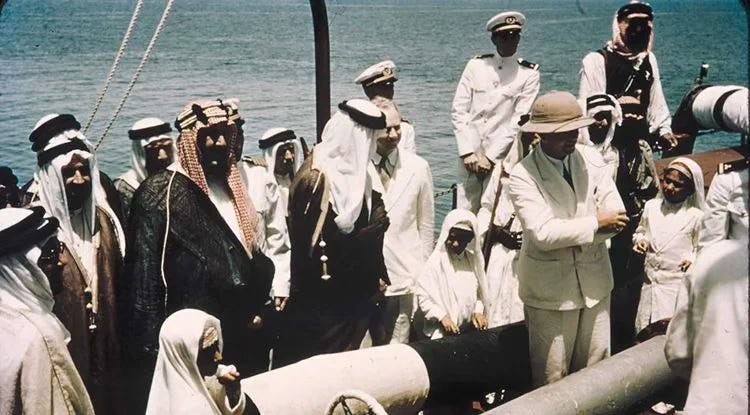
Eighty-seven years ago this month, King Abdulaziz crossed the Dahna Desert in a convoy of 400 cars to watch oil flow for the first time, arriving at Ras Tanura on the Arabian Gulf coast where a tanker called the D.G. Scofield sat waiting. He opened the valve himself, Saudi oil entered the global economy, and the story the West prefers, of American ingenuity unlocking a sleeping desert, began writing over the one that was actually unfolding.
The 1930s are, in a narrow sense, an American story, one of concession, geology and drilling. But the 1980s are an Arab one, and the distance between those two chapters is the real history of Aramco.
How the sons and grandsons of a tribal society went from handing foreigners a concession for £35,000 in gold to running one the most profitable company in human history, in a single generation, is not a footnote. It is the whole point.
The deal that started it all
Before any of this, there was an imperial contest, as there always is when large quantities of valuable resources are discovered somewhere the great powers have decided it cannot do without.
The 1930s Gulf was a battleground between two visions of how the world’s resources should be controlled. Britain had already cornered oil in Iran and Iraq, its companies held the concessions, its navy kept the shipping lanes open, and its diplomats made sure the terms stayed favorable to London, as they had a talent for doing. The Americans were the insurgents: commercially ambitious, unencumbered by the administrative overhead of empire, and very much aware that the British had gotten there first.
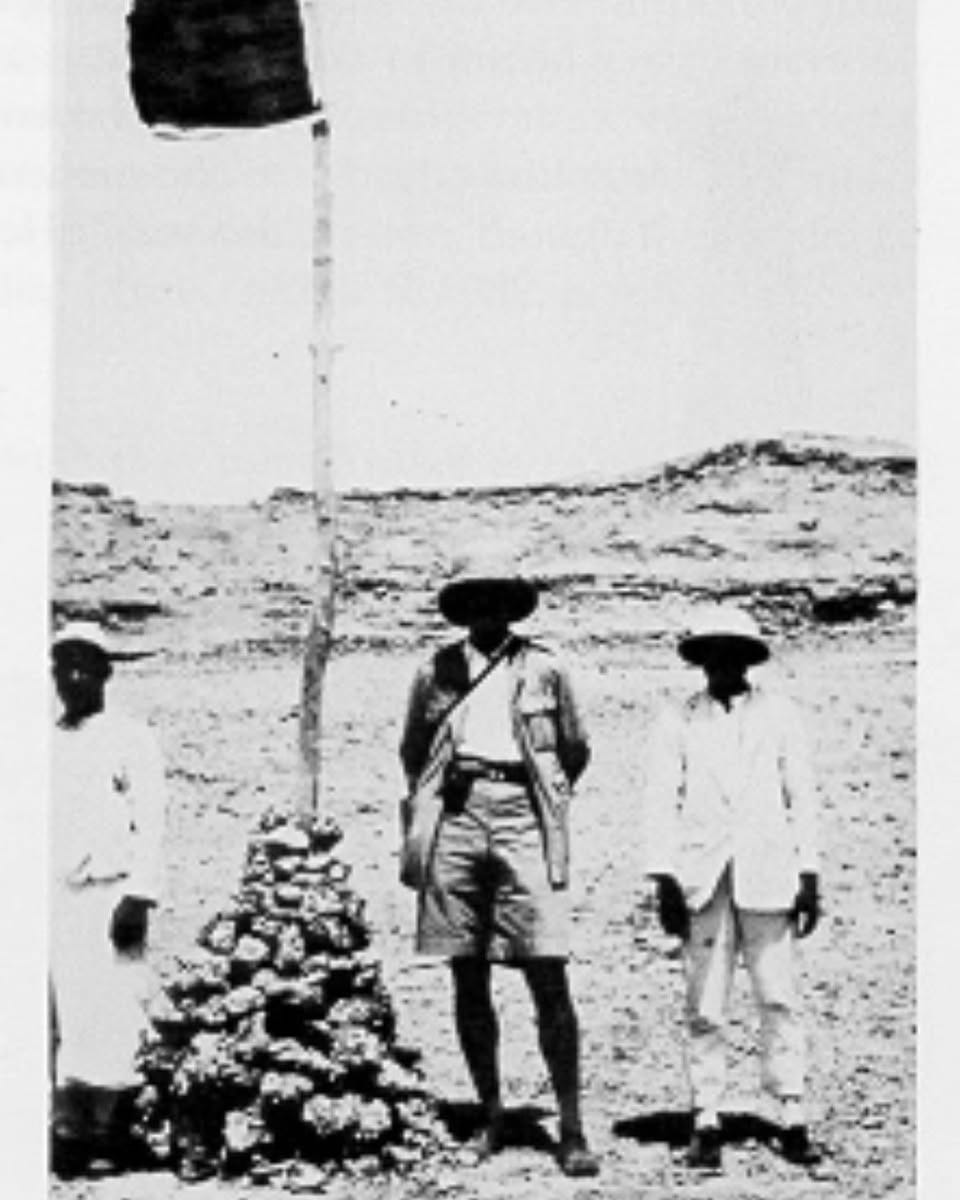
Fred Davies was one of those Americans, a Minnesotan who had spent most of the 1930s foraging around the Middle East for oil on behalf of the Standard Oil Company of California, better known as SOCAL. He found some in Bahrain, and then, standing on oil-bearing ground there and looking across the Gulf toward the newly founded Saudi Arabia, concluded that the geological formations he could make out looked remarkably similar to the Bahrain dome beneath his feet. It was, as these moments of historical consequence tend to be, equal parts rigorous science and borderline reckless instinct.
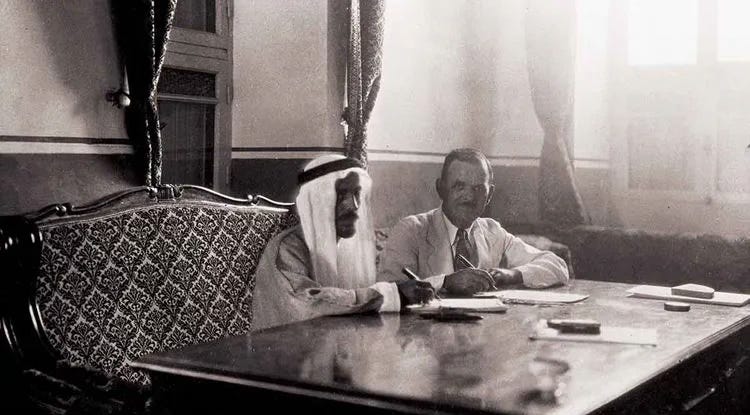
In 1933, the concession SOCAL secured, brokered by an American named Lloyd Hamilton and the king’s advisor Abdullah Sulaiman, now reads like a document from a parallel universe. SOCAL paid £35,000 in gold upfront, another £20,000 eighteen months later, £5,000 per year in rent, and royalties only if oil was discovered in meaningful quantities.
Saudi Aramco’s profit at some point was $111 billion. The Americans beat the British not with gunboats but with a handshake and a contract that, at the time, probably looked like a speculative punt on an empty desert and, in retrospect, was the most consequential commercial transaction of the twentieth century.
The telegram nobody obeyed
The contract was worth nothing without oil, and for five years, there was none to speak of.
By 1938, SOCAL had sunk millions into eastern Saudi Arabia, drilled six dry wells across the rocky terrain around Dammam, and exhausted whatever patience American corporate boards have for geological optimism in foreign deserts.
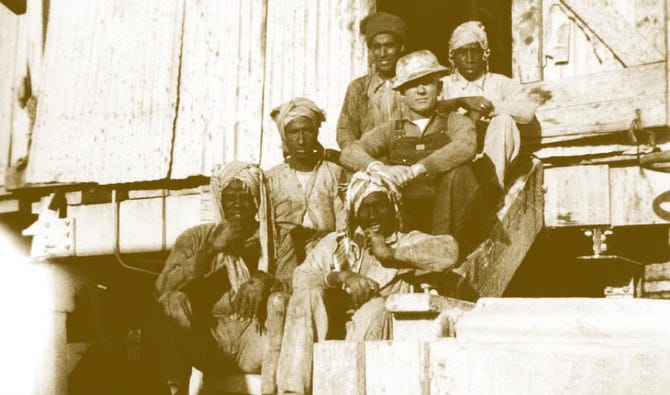
They sent a telegram to the two geologists they had stationed out there, Tom Barger and Max Steineke, instructing them to stop drilling.
Barger and Steineke had been at it for three years, led through the landscape by a Saudi guide named Khamis ibn Rimthan, a man who appeared to possess some intuitive understanding of the terrain that no amount of formal geological survey had managed to replicate, and they had precisely nothing to show for it.
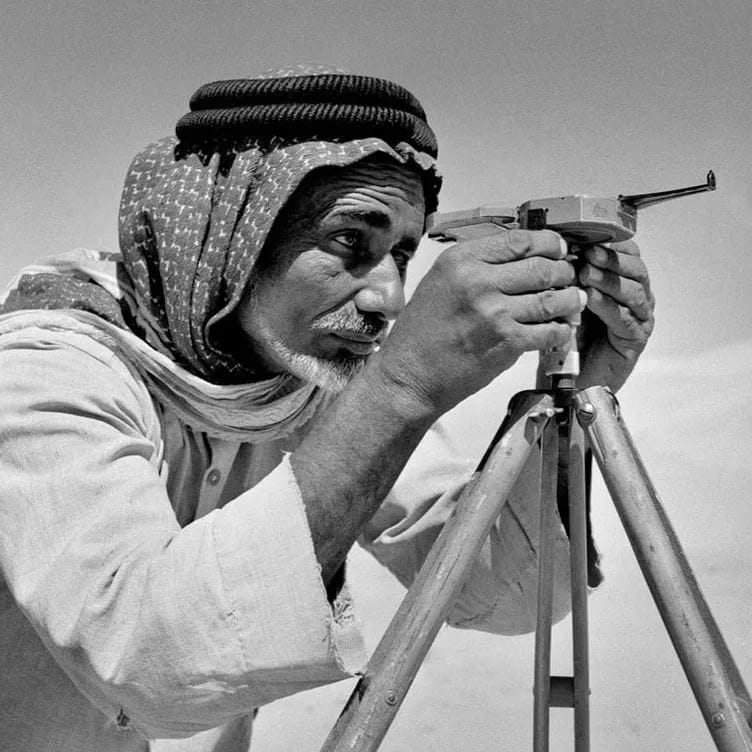
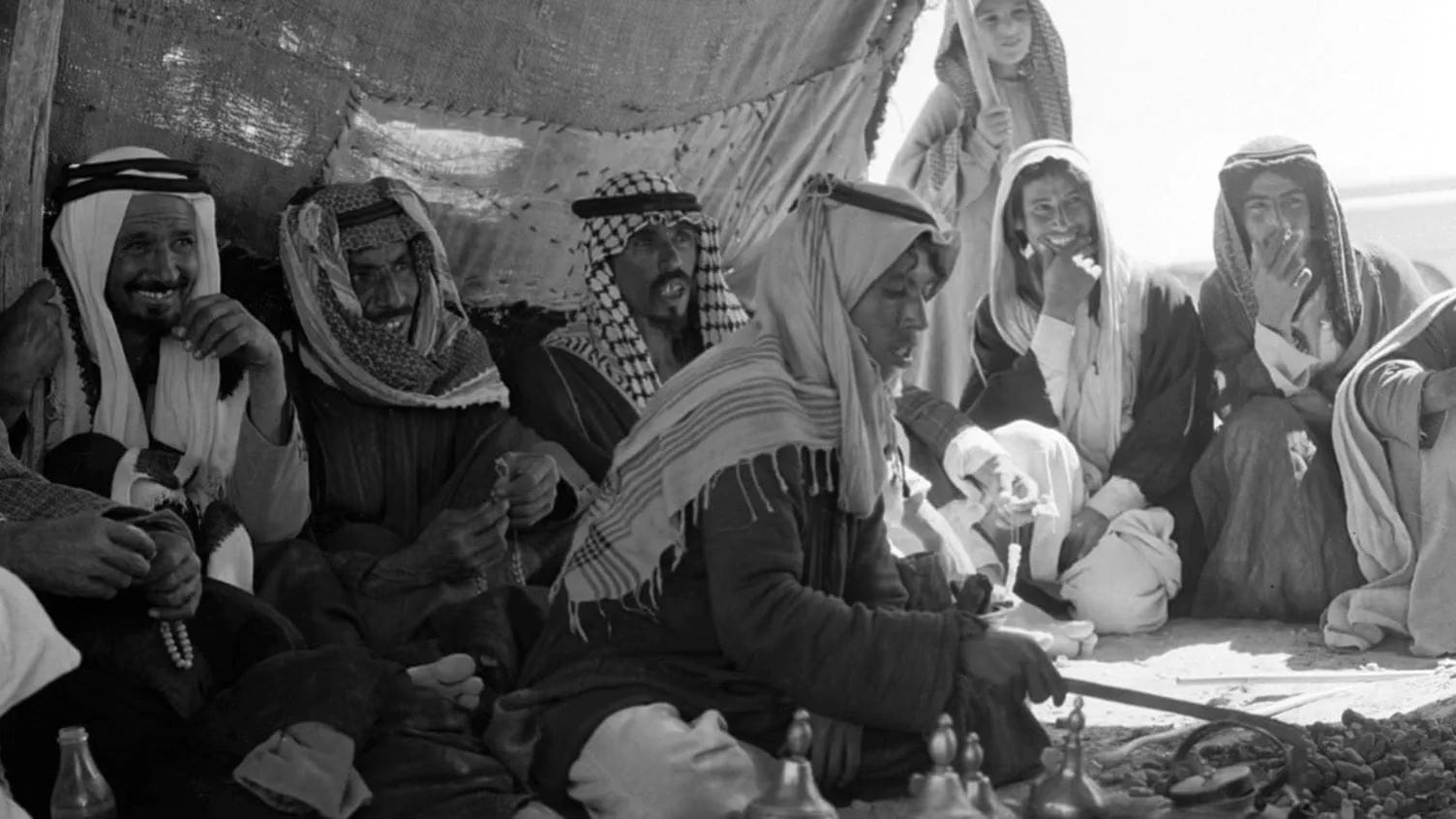
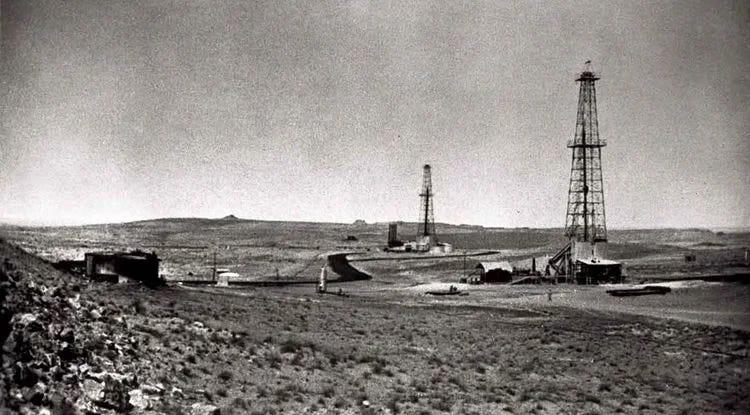
Steineke ignored the telegram and drilled another 200 feet into Well No. 7, which is either the most consequential act of professional insubordination in the history of capitalism or a reminder that the people closest to a problem often understand it better than the people signing the memos.
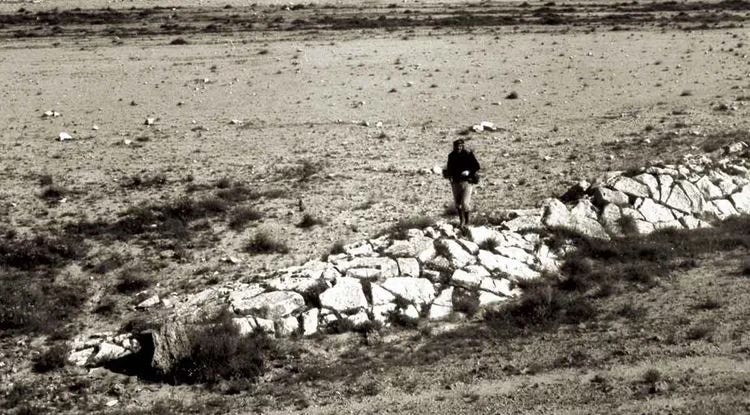
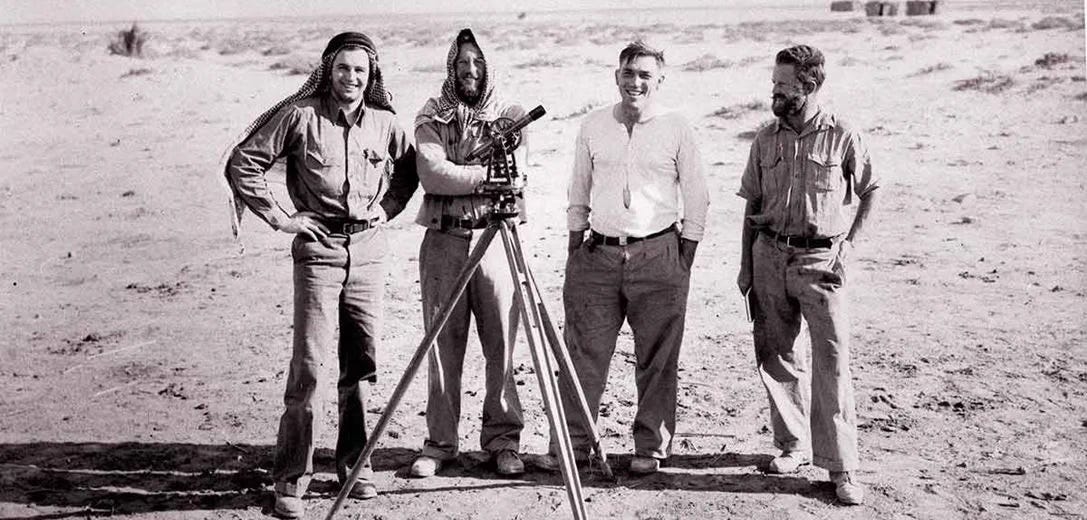
The well produced 1,500 barrels on its first day, 4,000 a few days later, and went on to pump more than 32 million barrels over 45 years before it was finally shut down in 1982, by which point the company it had created was already one of the most powerful economic entities on the planet.
That single decision, one geologist defying one corporate order in the middle of the Arabian desert, is the founding act of Saudi Aramco.
The part that gets left out
The standard telling of the Aramco story ends somewhere around here: Americans find oil, king opens the valve, empire is born, fade to credits. It is a satisfying arc, and it has the additional virtue of being roughly accurate as far as it goes, which is not very far at all.
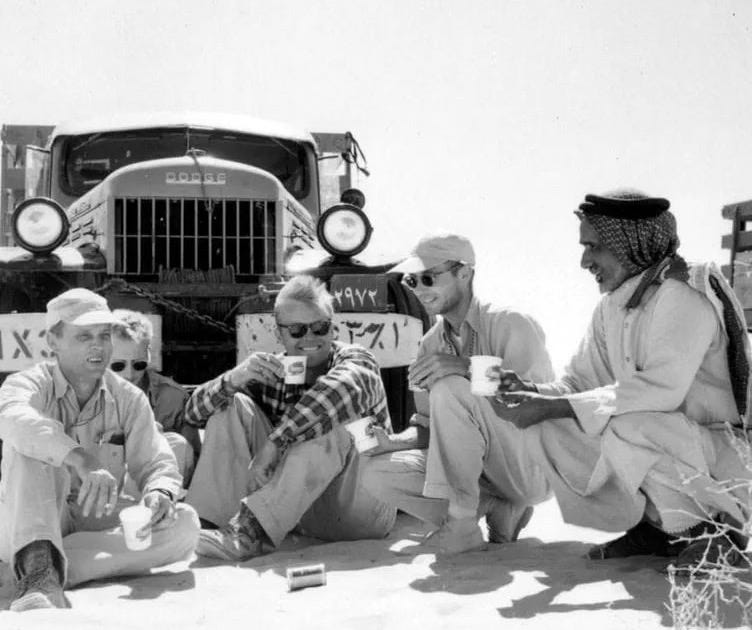
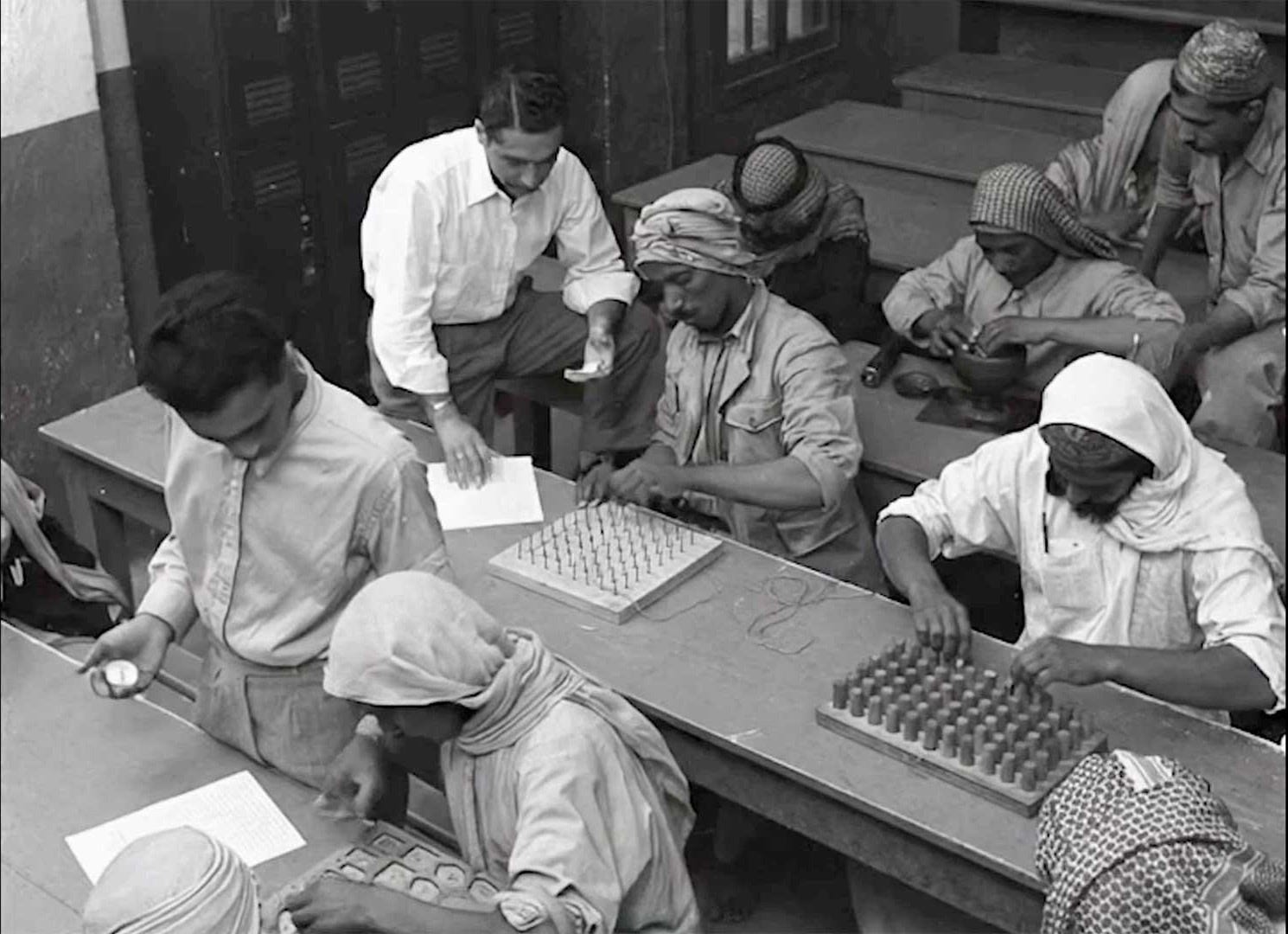
The Americans found the oil, but the Saudis built the company. From almost the beginning, Aramco ran training programs for Saudi workers, opening its first school in Al-Khobar in 1940 in a rented house with nineteen students and furniture assembled from whatever was available, expanding to a second location within two months because demand outpaced the space.
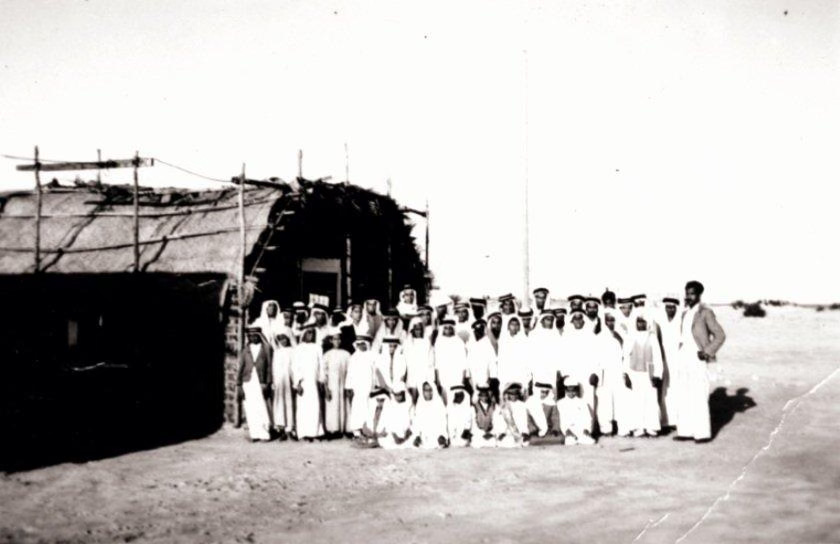
By the 1950s, Aramco had adapted an American wartime industrial training model, setting aside one eighth of all production time for worker education, and the results were striking enough that when the company brought in outside consultants to evaluate the program, they were reportedly told there was nothing to improve.
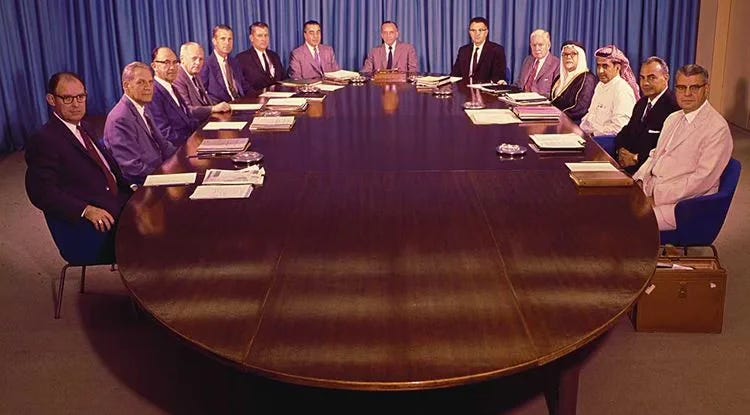
By 1957, Saudi Arabs made up 70 percent of Aramco’s 18,000-person workforce. By 1967, they held 57 percent of management and supervisory positions, which is not the profile of a company treating its host nation as a labor source rather than a talent pipeline.
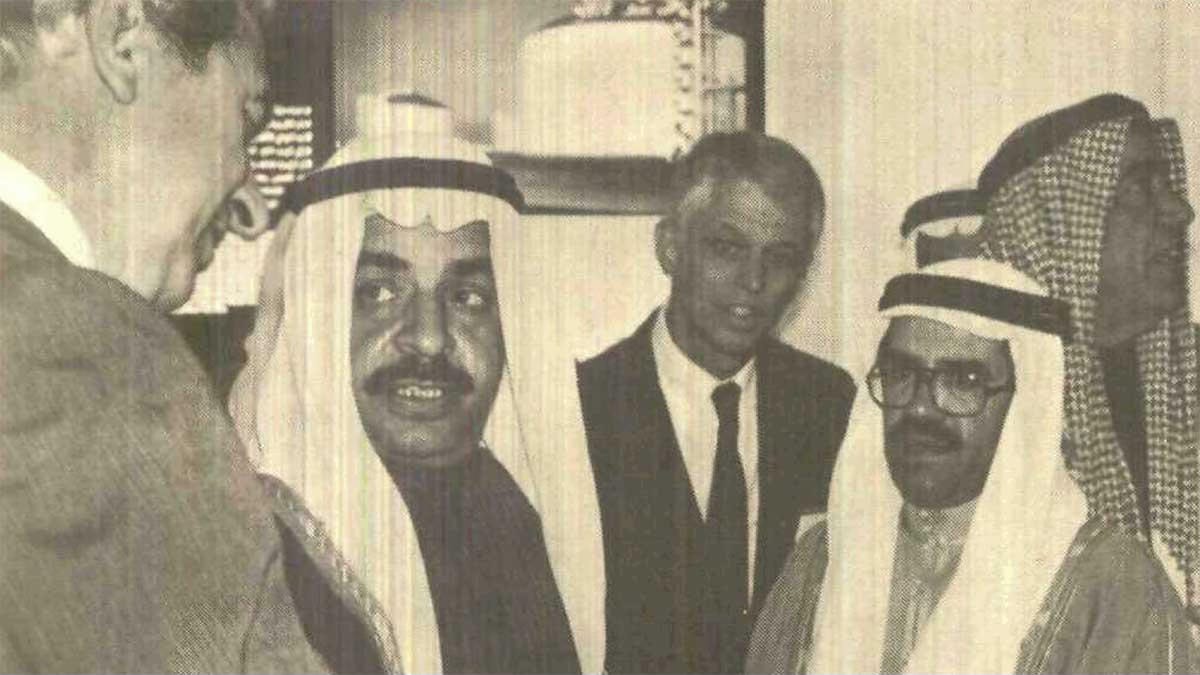
The most compressed version of this entire story is Ali Naimi, who joined Aramco as an office boy at around age eleven after lying to the company doctor about his age. The doctor wrote down seventeen, apparently persuaded by a story about family hardship and Bedouin genetics, taught himself to type well enough to reach a hundred words per minute, then decided he wanted to be a geologist because, as he told an interviewer, he thought it might help him become president of the company.
The assistant general manager he said this to reportedly replied that it was as good a reason as any and assigned him to an exploration rig. Naimi went on to earn a geology degree from Lehigh University, a master’s from Stanford, and became Aramco’s first Saudi president in 1984.
His biography is perhaps Saudi Arabia’s transformation compressed into a single career: a boy from the Eastern Province who talked his way into a clerical job at eleven and retired as president of the world’s biggest company after IPO.
How power actually transfers
By the 1970s, the arithmetic of the global oil market had shifted decisively in favor of the producers, and the region’s governments knew it. Most nationalizations of the era happened through rupture: seizures, expulsions, the cancellation of contracts and the burning of goodwill accumulated over decades. Saudi Arabia, characteristically, took a different approach.
Between 1973 and 1980, the kingdom negotiated its way to full ownership of Aramco, acquiring a 25 percent stake in 1973, increasing it to 60 percent by 1974, and reaching 100 percent on April 15, 1980, with retroactive financial effect to January 1, 1976, a detail that suggests the Saudis had a reasonably clear sense of what they were doing and when.
No assets were seized, no executives were expelled, and no dramatic rupture was manufactured for domestic political audiences. What happened instead was a methodical transfer of ownership through the same instrument that had governed the relationship from the beginning: negotiation, conducted by people who understood that control without operational continuity was a hollow prize.
See, Saudi Arabia wanted to own Aramco, but it also did not want to lose forty years of accumulated American expertise and institutional knowledge, so it structured a handover that preserved both, which is exactly the kind of strategic patience that tends to look obvious in retrospect and nearly impossible to execute in real time.
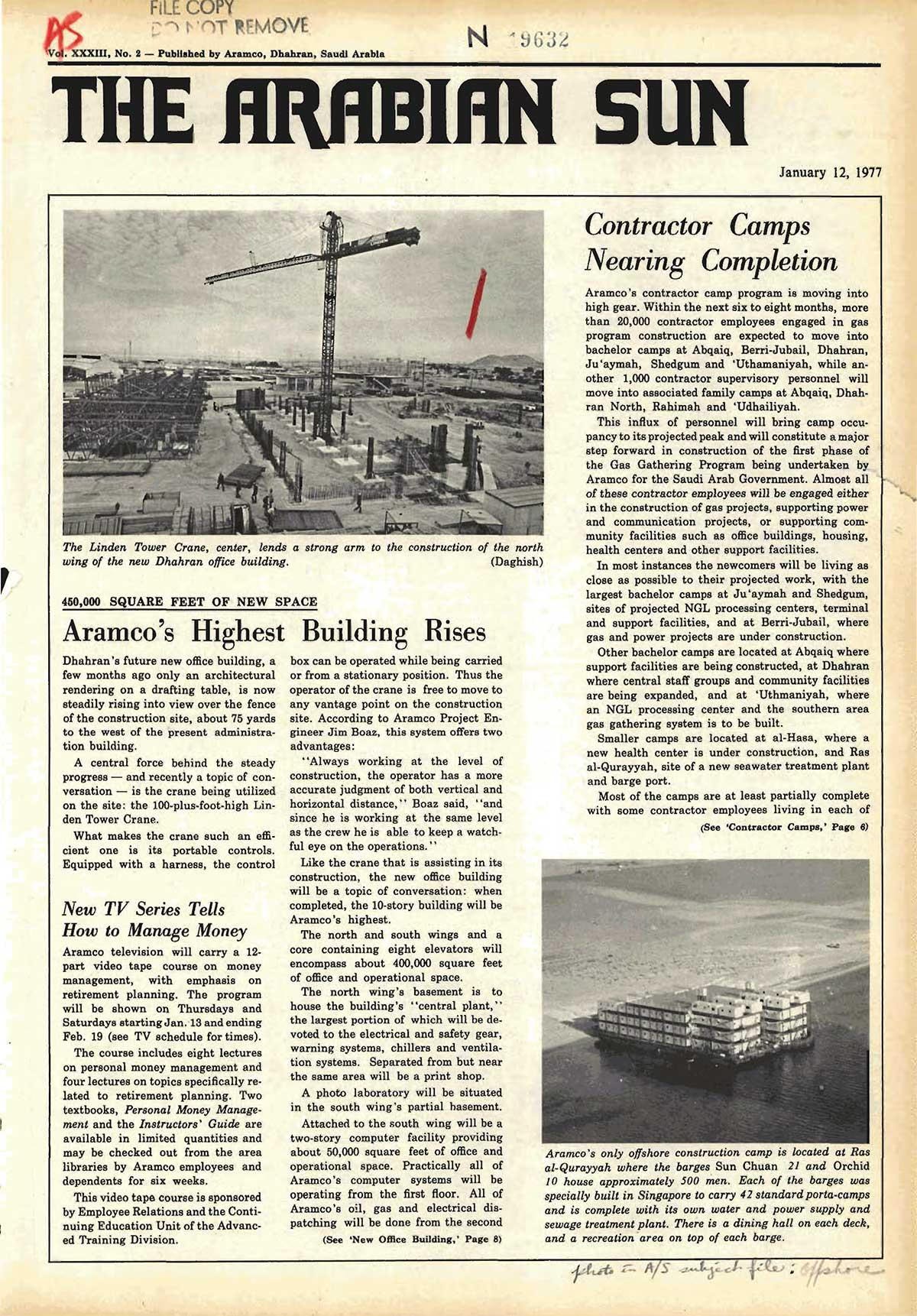
By 1984, Saudi nationals held nearly 62 percent of Aramco’s supervisory positions, and the company that had once been run by Americans building a little piece of suburban California in the desert, was now run by Saudis operating one of the most technically sophisticated energy companies in the world, because they had spent four decades making sure they understood how.
What a badge number actually tells you
The Naimi biography is the most compressed version of this story, but it is not the only one. For that, you need a badge number.
Abd al-Aziz Shalfan’s badge number was 4, meaning there were exactly three Aramco employees before him. He earned it in 1934 after spotting two foreign geologists in a Bahrain market, talking his way through their interpreter, and asking if he could come along to look for oil on the Saudi mainland. They said yes on the spot, which says something about either their judgment or their hiring process, possibly both.
What made Shalfan unusual was how far he had already traveled before any of this. Most young men from the Najd had never seen a foreigner, let alone left the peninsula, but Shalfan had made the journey to Kuwait at nine years old, fourteen days by camel caravan with his merchant uncles, where he attended a regular school alongside his Koranic studies. He ended up in Bahrain working a shopkeeper’s stall in the Manama suq, and from that single interaction, went on to work at Aramco for almost half a century, long past any reasonable retirement age, reportedly because he found the prospect of leaving difficult to contemplate.
Shortly before he died, someone asked Shalfan what the discovery of oil had meant for Saudi Arabia, and he said: “We have gone from nothing to everything.” It reads like a line someone wrote for him, but it wasn’t, it is a precise account of a transformation that happened within a single lifetime, delivered by someone who had watched it from the inside since the beginning.
The pipelines, the refineries, the Master Gas System, the $12 billion bond that attracted $100 billion in investor interest, the $111 billion in annual profit at one point: all of it traces back to a geologist who ignored a corporate telegram and drilled 200 more feet into the desert, and a twelve-year-old who asked a stranger if he could come along.
The frontier story is real, and it has genuine drama. But the more consequential one is what came after it, a region that decided it would not simply be the site of someone else’s extraction, that absorbed the knowledge on offer, built the institutions from scratch, and eventually ran the whole operation itself.
That is not a footnote to the Aramco story. It is, depending on what you think the story is actually about, the only part that matters.