


Good afternoon, and welcome to the third issue of Creator Games.
I’m Salil, co-founder of Third Studios, I lead everything creator economy at THIRD, and I’ll be writing and editing this newsletter every week.
Creator Games exists to discover, fund and tell the stories of the next generation of creator entrepreneurs. This newsletter is where we share the ideas, companies and opportunities driving that mission across Asia, Africa and the Middle East.
If you’ve got any stories to share or any feedback, feel free to email me at salil@third.group.
— Salil
Today’s lineup:
Japan’s Virtual YouTubers are taking over the world and nobody saw it coming
Netflix is investing in India’s creative ecosystem. The real play is the talent pipeline.
VHS Dates recreated a dating show that never existed.

Japan’s Virtual YouTubers are taking over the world and nobody saw it coming

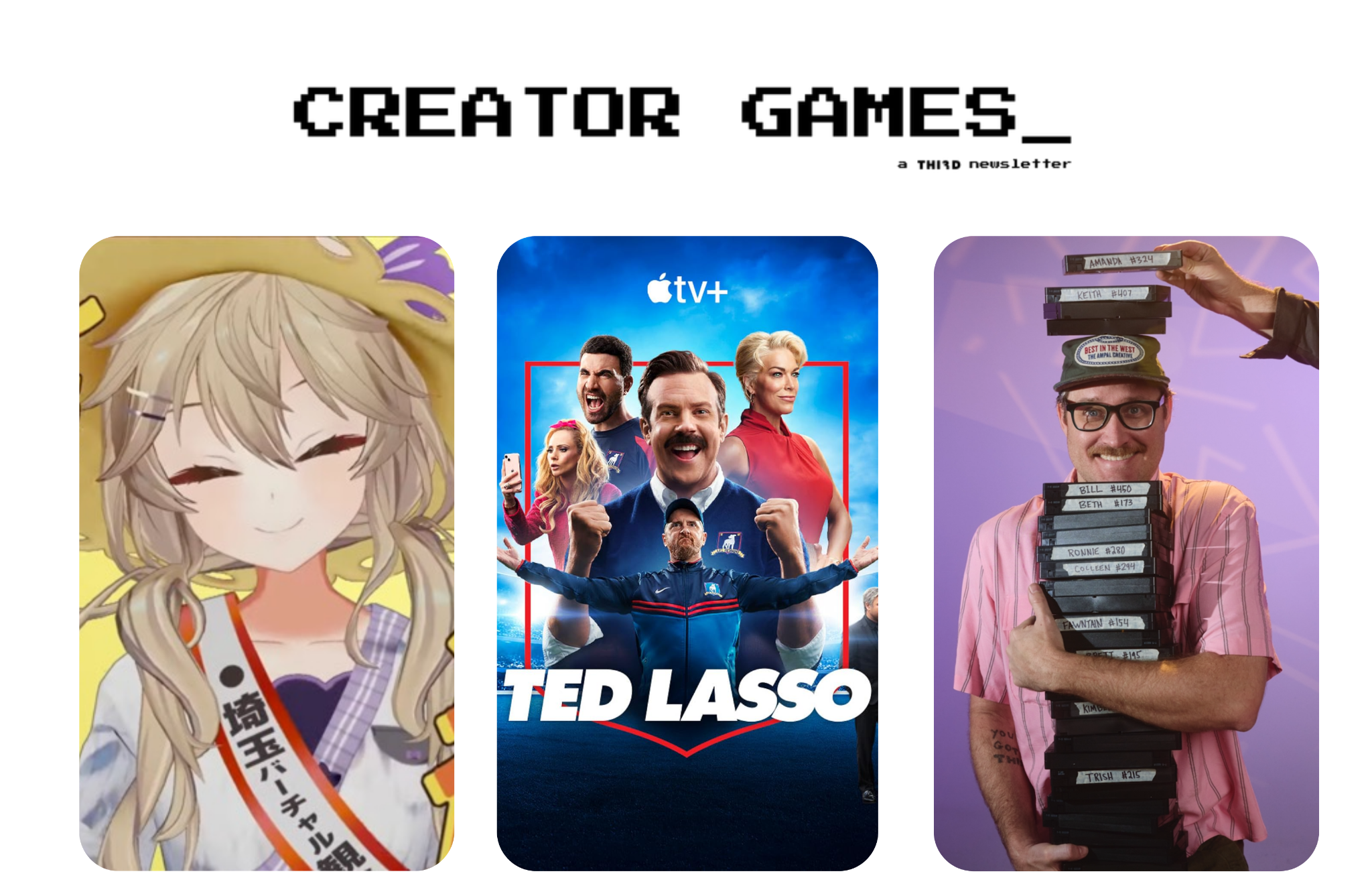
Vee, a five-member VTuber project, was launched by Sony Music Entertainment (Japan) in May.
VTubing started in Japan in the 2010s as a niche corner of the internet: anime-aesthetic avatars, motion capture suits, voice modulators, livestreams. The word itself is a portmanteau: virtual + YouTuber. Nobody predicted it would become one of Japan’s most serious cultural exports.
The Business Case →
Today, major talent agencies manage VTubers the way labels manage musicians: custom avatars, multilingual content, global distribution. KAF sold out Nippon Budokan. 7,000 seats. The same hall where the Beatles played in 1966. Sony Music Entertainment Japan is now in the game too. It launched Vee, a project backing five VTubers across streaming, music, and voice acting, calling it the largest virtual talent development project in its history.
The bet is explicit, VTubers as Japan’s next great cultural export after anime and manga. “VTuber” now ranks among the top dream jobs for Japanese schoolchildren.
But the more interesting story isn’t the entertainment. It’s what happens when governments, fire departments, and universities start hiring virtual avatars instead of spokespeople.
Sakai City has a dog detective mascot doing public outreach. Nagoya’s Minami Fire Department uses a VTuber to teach earthquake preparedness. Saitama Prefecture’s virtual tourism ambassador is pulling audiences that a press release never could. Institutions that couldn’t crack younger demographics are routing around the problem entirely, building characters instead of campaigns.
The education angle is where it gets structurally significant. VTubers with academic credentials are running livestreamed lessons on mathematics, politics, Japanese language. Students who disengage in classrooms are staying on for hours.
My POV: The VTuber story gets covered as pop culture. It should be covered as infrastructure.
Japan took an entertainment format built on anonymity and aesthetic pleasure and discovered it solves a distribution problem that governments, schools, and brands have been failing at for years: how do you reach people who’ve already opted out of official channels?
The avatar isn’t the product but trust is

Netflix is investing in India’s creative ecosystem. The real play is the talent pipeline
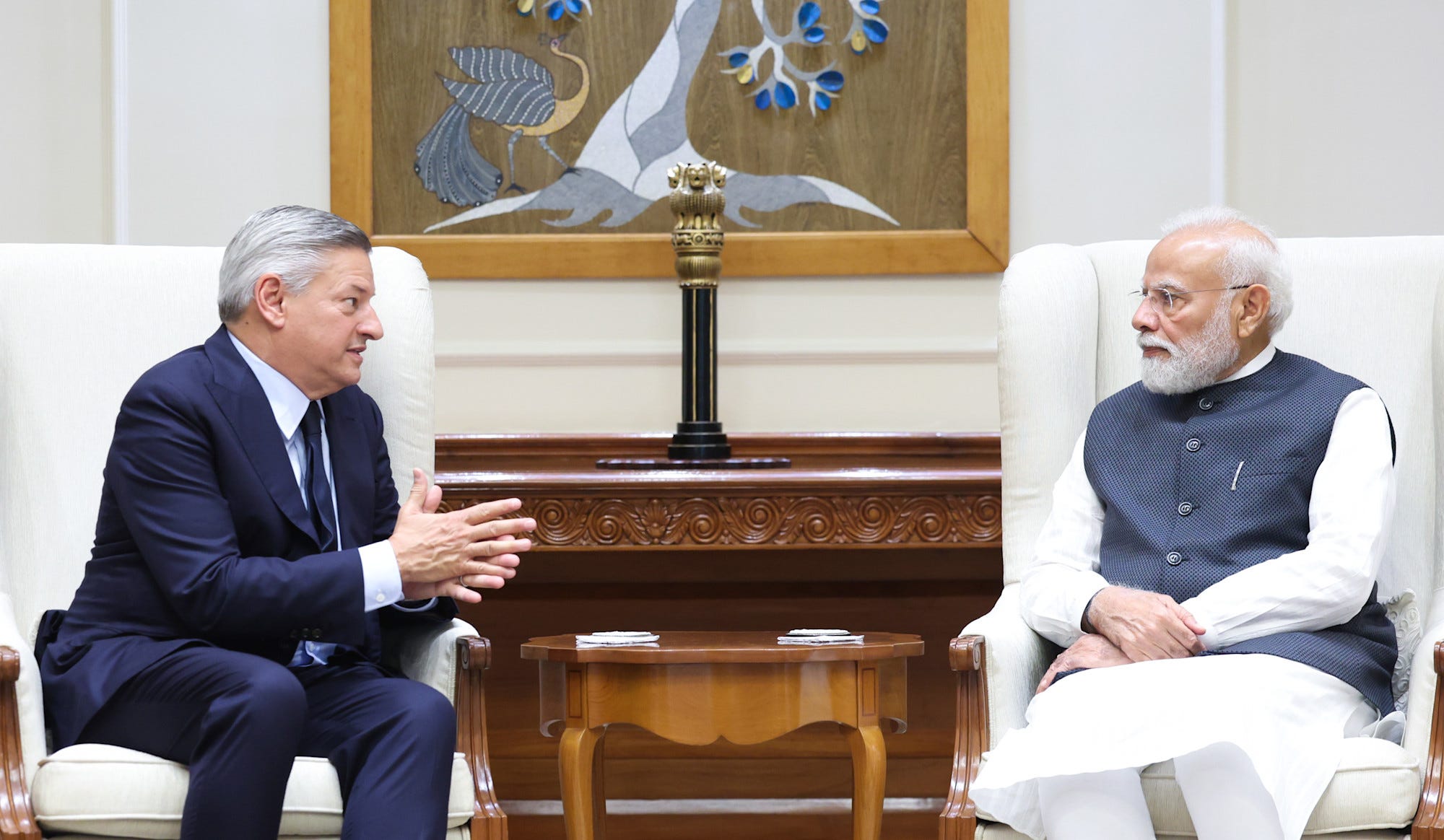
Ted Sarandos flew to Delhi, met the Prime Minister, and announced a supply chain investment. Here’s all that you need to know.
The Business Case →
Netflix has been in India for a decade. It has done over 200+ originals, filmed across 100+ locations and has estimated 20-25 million paid subscribers against a global base of 325 million.
So, potentially there could be no Netflix globally without India, that’s what he said. And the meeting with the Prime Minister, followed by an announcement that could share the AVGC sector in India.
They have launched two partnership initiatives, one with the Indian Institute of Creative Technologies to co-develop curriculum in visual effects and media technology workflows, and the other with the National Film Development Corporation to train audio description writers and voice-over artists. Disciplines spanning character animation, e-sports management, interactive comics, virtual art department creation.
Think of this like Netflix building the factory floor from ground up, not just buying what the factory makes.
The context goes even deeper. India’s AVGC sector, animation, visual effects, gaming, comics is a stated national priority under the Viksit Bharat 2047 agenda. The talent gap is real and well-documented.
Even before this, Netflix first launched its mobile-only subscription plan in India in 2019, after testing lower-priced mobile plans in India and other Asian markets. The successful Indian launch subsequently led Netflix to test the mobile-only offering in other countries.
My POV: Every major streaming platform is in India. So, the next logical step in building this infrastructure is owning the talent. It’s like how Adobe became the center piece to the creator economy. Think of editors, designers, and animators, all confined to Adobe’s workflow.
Same is the case here.
Sarandos said Netflix wants to be “the first place you check and the last service you cancel.”

VHS Dates recreated a dating show that never existed
The Instagram account VHS Dates has been going viral for resurfacing lost dating service videotapes from the 1980s.
Think of the grainy footage, awkward men in polo shirts and women with big hair selling themselves to a camera.
But the story gets interesting when a New York Times reported, Sopan Deb, flew to Los Angeles to meet the creators. He asked the obvious question: where do you find these tapes?
The Business Case →
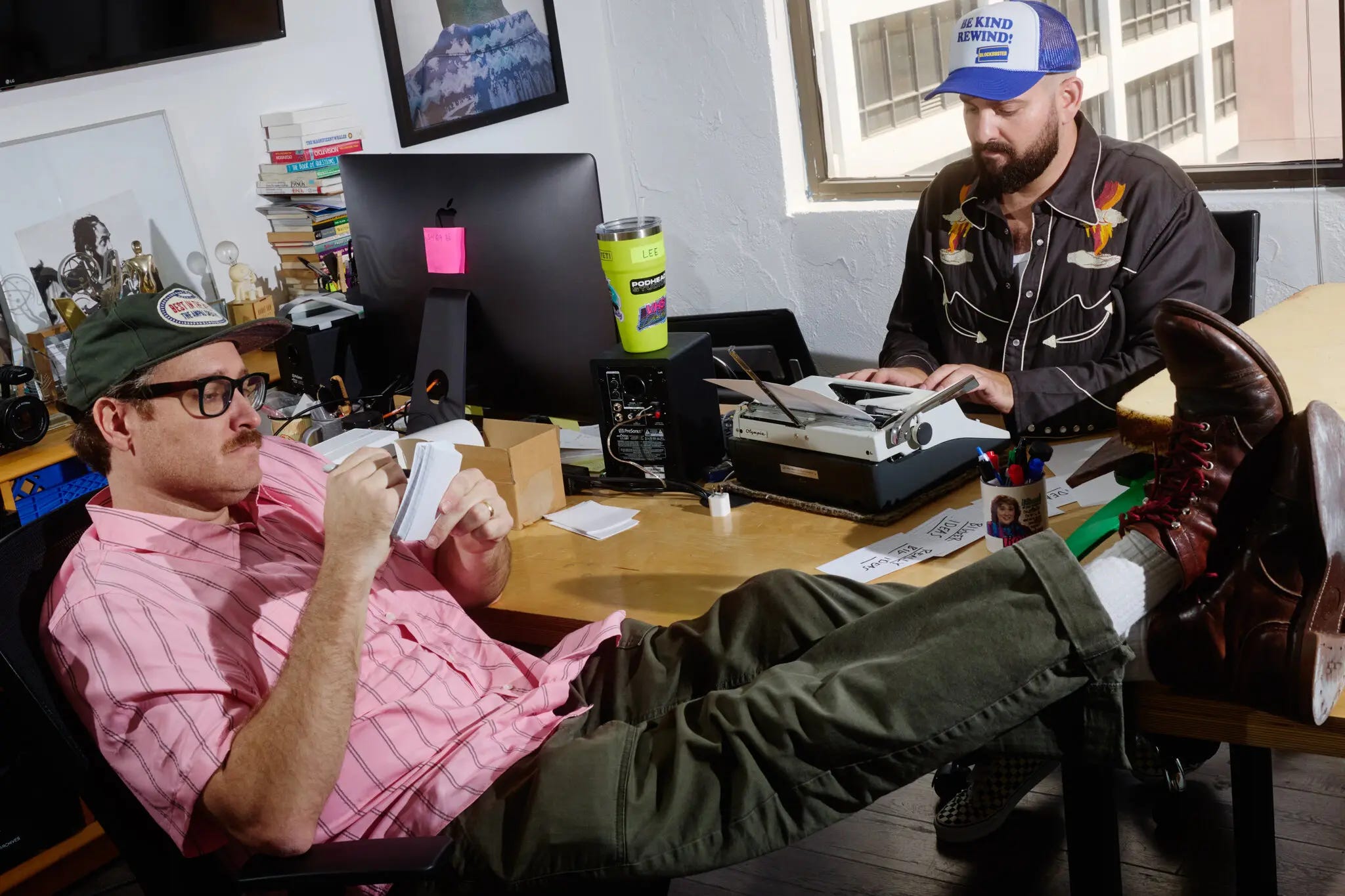
The VHS Dates was created by filmmakers Lee Citron and Trevor Worley. They describe the origin story when a box of VHS tapes was found in the basement of an office in Downtown Los Angeles.
Estimated to be from the mid-80s to the early 90s. From a dating company called VHS Dates that once operated out of Van Nuys, California.
That’s when they started VHS Dates, an Instagram account staging fake 1980s video dating tapes, now has nearly 900,000 followers, a merchandise line, and a Tribeca Festival appearance.
They made the whole thing with actors, a green screen, a vintage Ikegami tube camera, and old Sears catalogs for costume research.
When the NYT revealed the truth, one woman said she was “heartbroken.” Another said “I hate that.” A man who’d recorded his own real tape in the 80s said: “They look just like the real thing.”
And yet, they’ll probably keep watching.
A Syracuse professor who studies media and identity put it plainly: audiences don’t connect to the format, they connect to loneliness. To people putting themselves out there and hoping someone picks them.
My POV: Authenticity as a strategy is less about whether something is real, and more about whether it lands as real. The craft is in making the emotional core feel true, even inside something that’s clearly constructed.

🗞 Creator Gossip
Sony Pictures Networks India dropped its festive slate: KBC Season 18, Rohit Sharma’s entertainment debut, Ajay Devgn hosting Crime Patrol, Madhuri Dixit fronting Marathi KBC, and AR Rahman-backed Tamil Idol. Sony LIV is rebranding under It All LIVs Here to anchor it all digitally.
Ted Lasso is back on Apple TV after three years and this time Ted’s coaching a women’s second-division side in Richmond. 10 episodes, running through October 7, with the full original cast returning and Apple already planning two more seasons after this.

Subscribe | Advertise | Apply for funding | Watch | Follow
Learnt quite a few things this issue, thank you Salil!