


On October 29, Canada announced plans to invest up to C$1.6 billion in Cohere, the Toronto-founded artificial intelligence company, alongside private investors including NVIDIA, Bell and Germany’s Schwarz Group.
The government would acquire equity, while Cohere committed to maintaining its headquarters in Canada, creating at least 1,000 technical jobs and investing C$1.7 billion in Canadian computing infrastructure by 2030.
Prime Minister Mark Carney framed the investment as a question of sovereignty. Canada needed to develop and control its own AI capabilities rather than depend entirely on foreign technology companies.
What interests me isn’t the size of the investment. It’s how familiar the underlying logic is.
A government identifies a strategic industry, invests public money in a private company, and negotiates commitments intended to develop domestic capabilities.
This is industrial policy. And it’s increasingly how wealthy countries talk about their economic futures.
Yet for much of the late twentieth century, developing countries were encouraged to move in the opposite direction.
So what changed?
The history we conveniently forget
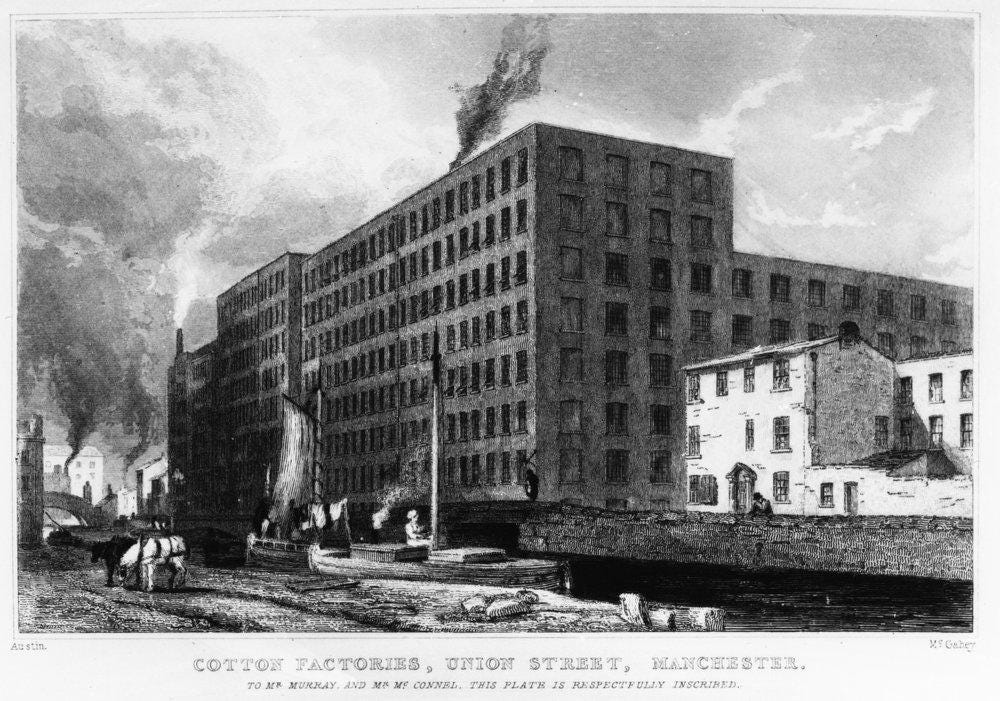
The distinction between free-market capitalism and state-led capitalism has never been as clear as we sometimes imagine.
Britain protected parts of its manufacturing economy before becoming a champion of free trade. The United States used high tariffs during much of its industrialisation. Japan coordinated investment and technology acquisition after the Second World War. South Korea directed credit towards selected industries, helping companies such as Hyundai become international competitors.
None developed through government intervention alone. Entrepreneurs, foreign technology, competition and international trade were essential.
But neither did they develop by leaving the allocation of capital entirely to markets.
South Korea’s experience is particularly instructive. Government support was often tied to export performance. Companies were expected to become internationally competitive, not simply survive behind permanent protection.
The state wasn’t replacing the market. It was attempting to create the conditions in which domestic companies could eventually compete in it.
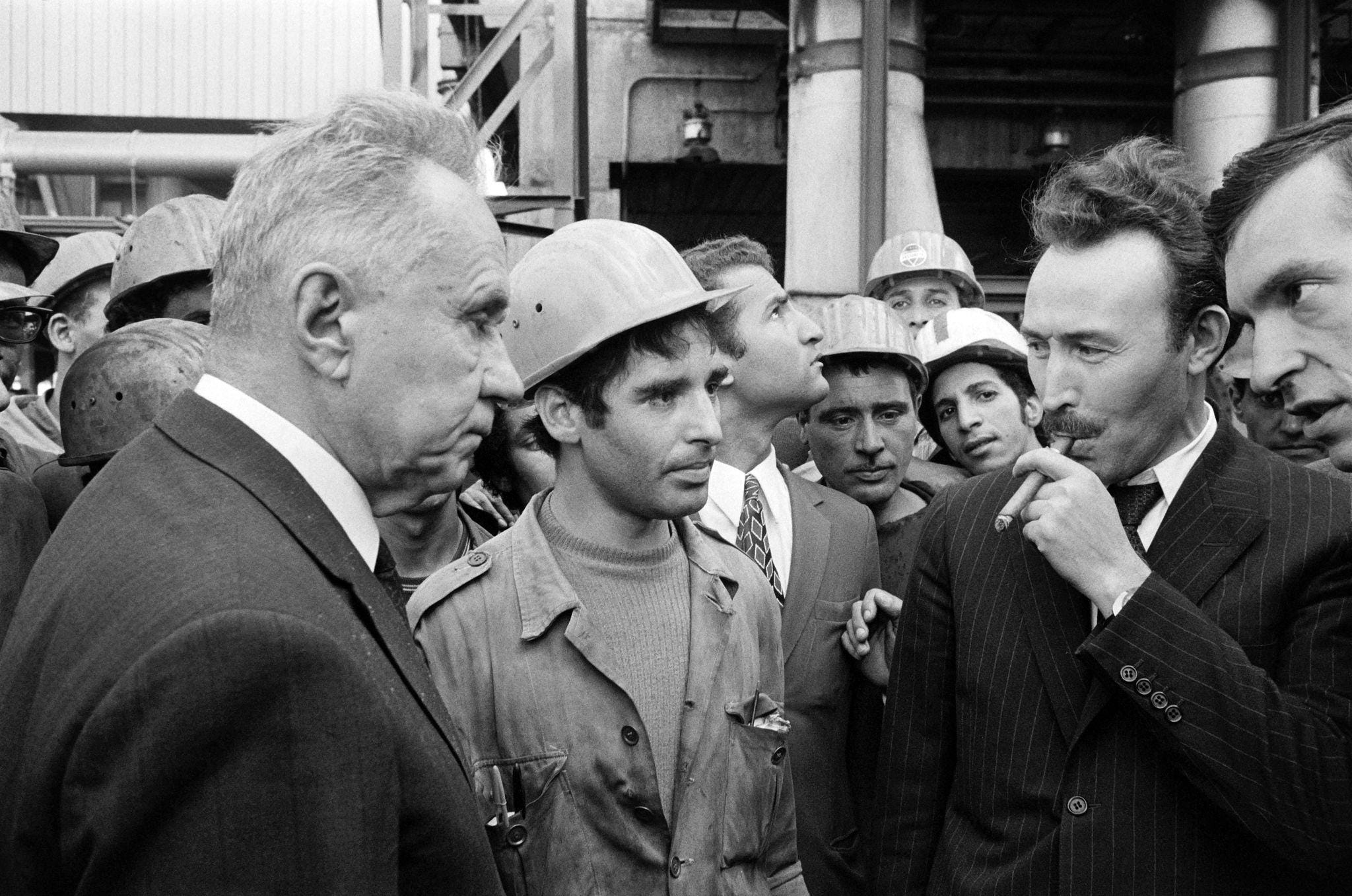
The history outside East Asia is more complicated.
Egypt pursued ambitious state-led industrialisation under Gamal Abdel Nasser. Algeria invested heavily in public industry under Houari Boumédiène. Saudi Arabia used public investment to develop industrial cities such as Jubail and Yanbu, alongside companies including SABIC.
These were different economic systems with different political institutions and outcomes. Some projects created lasting productive capacity. Others suffered from inefficiency, weak incentives or excessive dependence on public resources.
Their histories don’t prove that state intervention works. They demonstrate that it is not inherently a capitalist or socialist instrument, nor does it belong exclusively to democratic or authoritarian governments.
The question has always been what governments do with their power, and whether their interventions make businesses more productive or merely more dependent.
How intervention became a problem

In 1974, economist Anne Krueger published The Political Economy of the Rent-Seeking Society.
She argued that when governments create valuable privileges, such as import licences, businesses can spend resources competing for those privileges instead of improving their products.
She called this rent-seeking.
It was an important insight nonetheless. A subsidy can help create a competitive industry, but it can also protect a politically connected company from competition indefinitely. An import restriction can give a domestic manufacturer time to improve, or simply allow it to charge consumers more.
Krueger became the World Bank’s chief economist in 1982.
During the same decade, debt crises across the developing world increased the influence of international financial institutions over domestic economic policy. Countries seeking financial assistance often faced conditions involving fiscal restraint, privatisation, trade liberalisation and reforms to public enterprises.
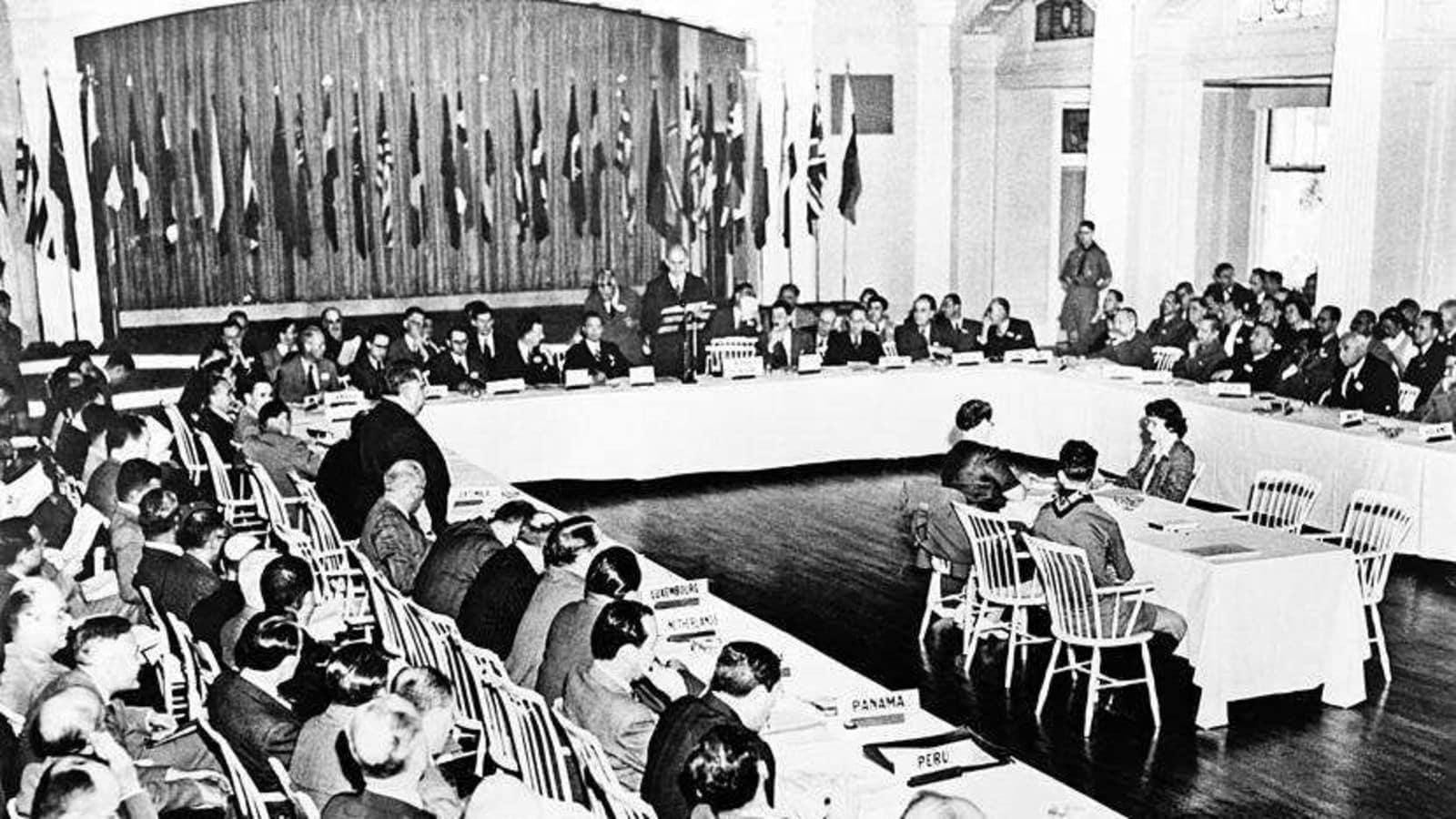
In 1989, economist John Williamson coined the term Washington Consensus to describe ten economic policy recommendations he believed enjoyed broad support in Washington concerning Latin America.
His original formulation was more nuanced than the ideology subsequently associated with it. Still, the phrase came to represent an era in which liberalisation and a reduced direct role for the state were widely promoted as routes to development.
For governments negotiating loans during financial crises, these ideas carried consequences beyond academic debate.
In 2002, economist Ha-Joon Chang gave the historical contradiction a memorable name: Kicking Away the Ladder.
His argument was that wealthy countries had often used tariffs, subsidies and state coordination to develop their industries, then discouraged poorer countries from using similar tools.
The criticism was not that every intervention succeeds. It was that countries still trying to industrialise were being asked to operate under constraints that today’s wealthy economies had not necessarily faced during their own development.
And now those wealthy economies are embracing industrial policy again.
The new language of state intervention
Canada’s Cohere investment is part of a wider shift.
The United States has invested public resources in semiconductor manufacturing and acquired an equity stake in Intel. European governments have made technological sovereignty and strategic autonomy central to their industrial ambitions.
The vocabulary has changed.
Government support is now described as strategic investment. Domestic production is resilience. Reducing reliance on foreign suppliers is sovereignty.
These are legitimate economic concerns. Semiconductor shortages, geopolitical tensions and the concentration of AI infrastructure have exposed vulnerabilities that markets alone may not resolve.
But the change in language raises an uncomfortable question.
Why is government intervention increasingly considered prudent when wealthy countries are protecting their technological futures, while similar ambitions in developing economies have so often been treated with suspicion?
This doesn’t mean every criticism of state-led development was hypocritical. Governments really can waste money, protect inefficient firms and reward political connections.
Nor does it mean Canada should abandon its investment in Cohere.
It means the economic case for intervention should be judged by its objectives, incentives and outcomes, rather than by whether the country pursuing it is already wealthy.
Who Gets to Build?
The answer isn’t for every country to create its own Cohere. Not every economy needs a frontier AI model, a semiconductor factory or a national champion.
But every country needs the freedom to decide which capabilities are worth building.
Industrial policy is neither a guarantee of development nor an excuse for governments to subsidise failure. Its success depends on whether public investment creates industries that can eventually compete without it.
The problem is that the return of industrial policy doesn’t mean everyone can afford to practise it. Wealthy countries can subsidise strategic industries, attract scarce talent and secure access to technology. Developing countries must compete for the same capital and capabilities, often with far less fiscal room.
The ladder hasn’t disappeared. It has become more expensive to climb.
And perhaps that’s the contradiction worth examining: the countries that once championed the free market are now spending billions to shape it.
If industrial policy is necessary for wealthy countries to remain competitive, what does it mean for countries that are still trying to become competitive in the first place?