


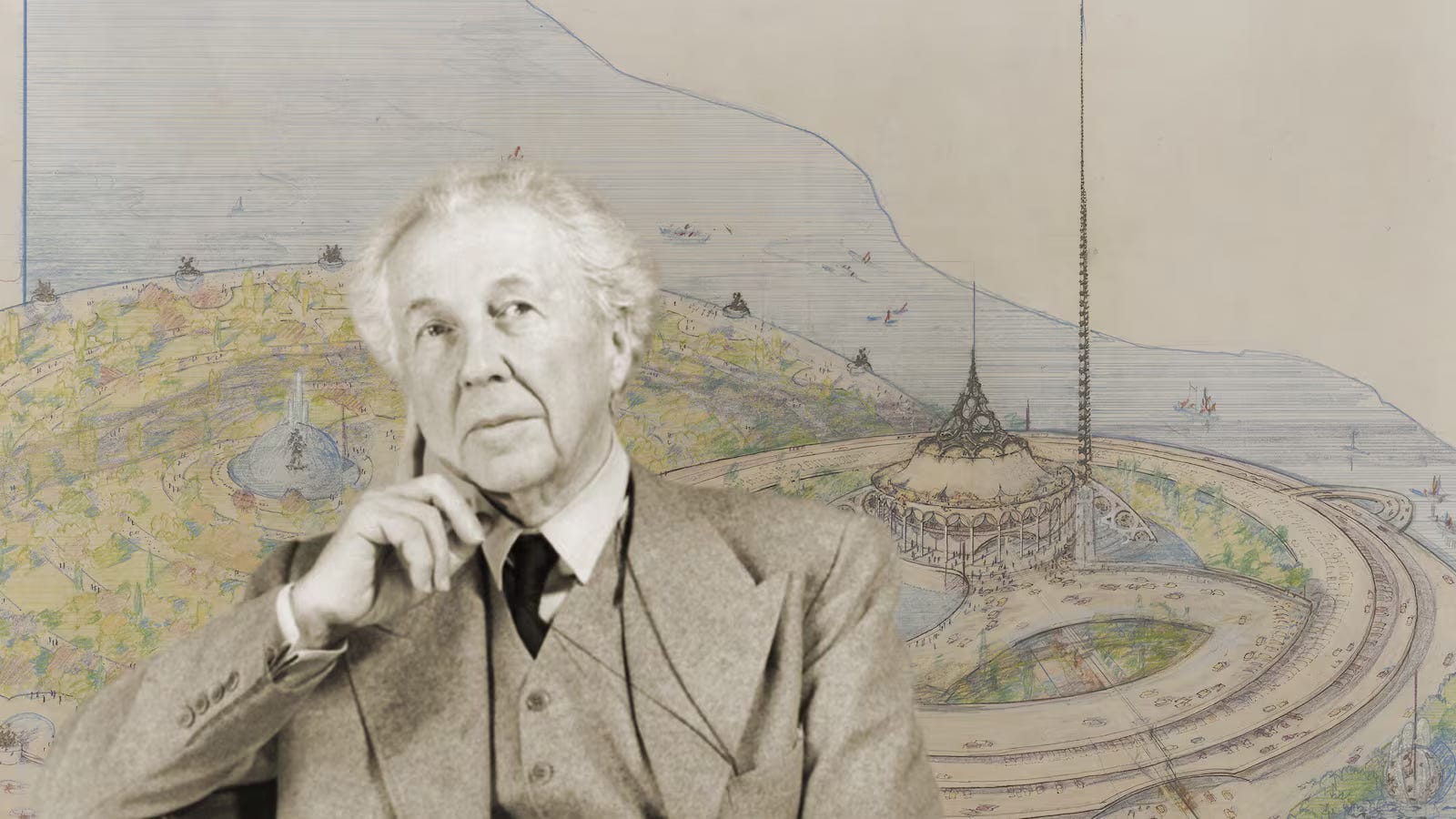
There is something wonderfully strange about imagining Frank Lloyd Wright in Baghdad.
He was almost 90 years old when he arrived in 1957, already one of the most famous architects in the world, and had technically been invited to design an opera house. This apparently felt insufficiently ambitious, so Wright did what Wright tended to do and expanded the assignment considerably.
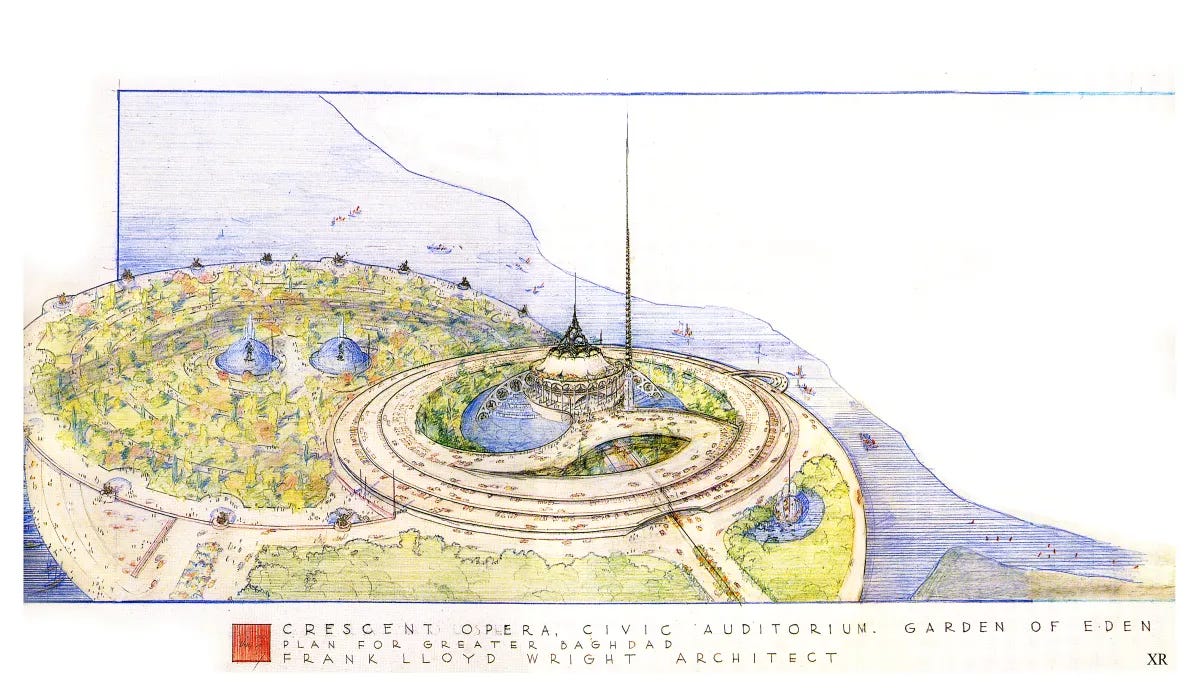
His eventual Plan for Greater Baghdad imagined an entire cultural complex on an island in the Tigris: an opera house, museums, gardens, fountains and a giant monument to the Abbasid caliph Harun al-Rashid.
He wasn’t the only one.
Walter Gropius, founder of the Bauhaus, was working on the University of Baghdad. Le Corbusier had been commissioned to design a 50,000-seat stadium and sports complex. Italian architect Gio Ponti was designing government offices. Alvar Aalto had been approached for a cultural centre. For a brief period in the 1950s, Iraq had assembled something approaching an architectural Avengers. Ponti’s own archive records the Iraqi government’s extraordinary roster of commissions.
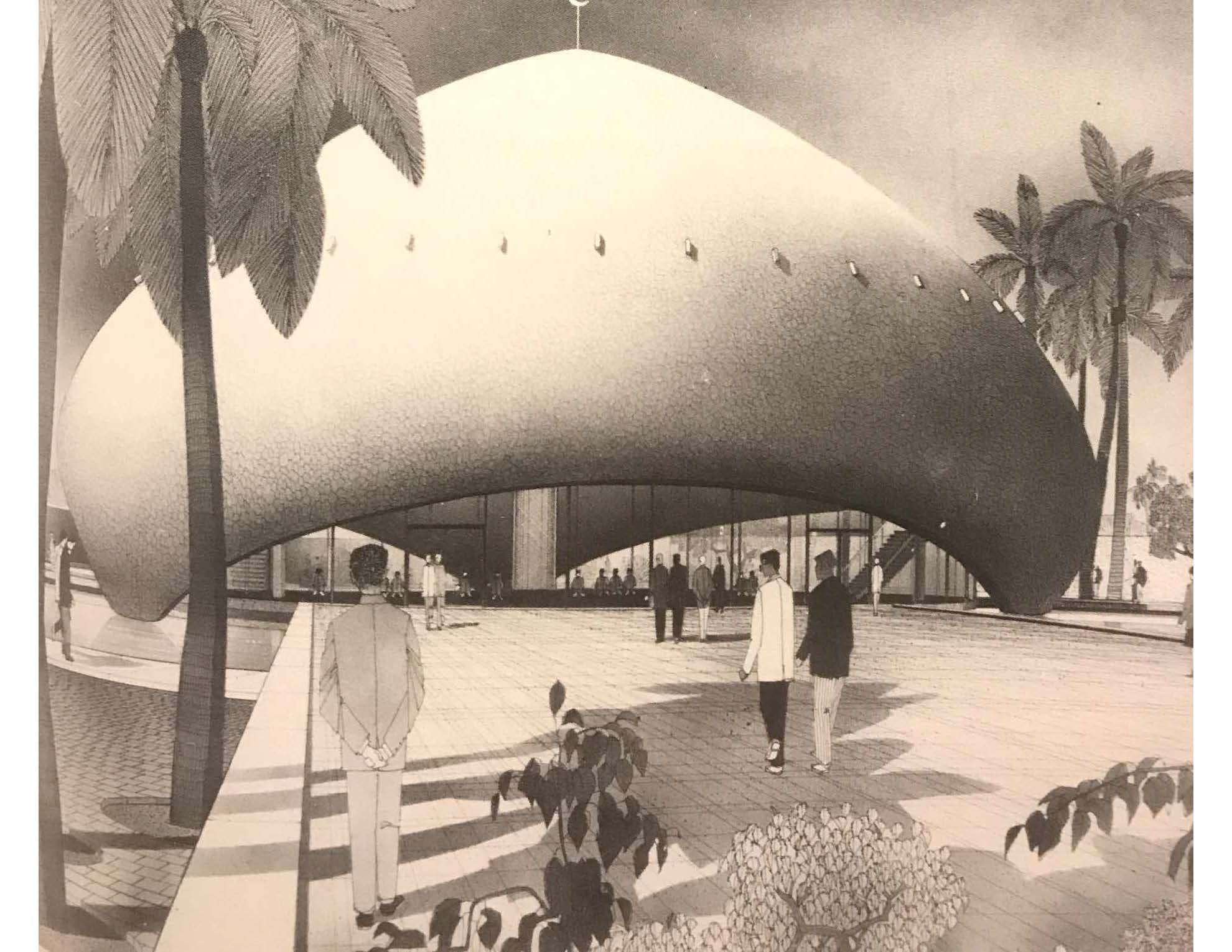
To me though, the more interesting question was why Baghdad thought they should come.
Because Iraq was not commissioning famous foreigners to sprinkle some Western sophistication over an otherwise static city. It was in the middle of an enormous attempt to decide what an Iraqi version of modernity might actually look like.
In 1950, Iraq established the Development Board to turn rapidly growing oil revenues into the infrastructure of a modern economy. Two years later, Iraq renegotiated its agreement with the Iraq Petroleum Company, securing a 50–50 profit-sharing arrangement that dramatically increased government oil revenues. Of the oil income flowing to the state, 70 per cent was then allocated to the Development Board for capital development.
The architects were arriving inside something much larger than an architectural experiment.
Iraq was investing in flood control, irrigation, roads, housing and public institutions. It was trying to take wealth generated by something it happened to have beneath its soil and convert it into productive capacity above it.
Today we would call this diversification, give it a 2030 deadline and produce a very expensive deck about it. In the 1950s, apparently, they just got on with it.
And architecture mattered because buildings were not just containers for this new economy. They were statements about the kind of country Iraq believed it was becoming.
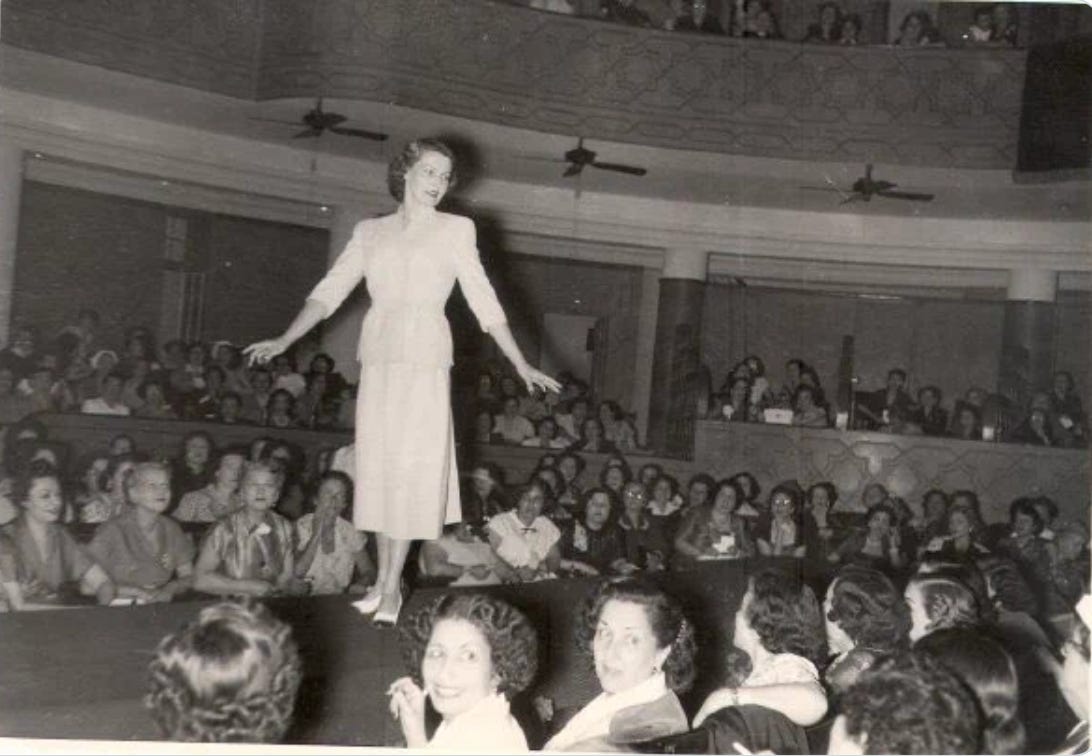
Perhaps this is why old photographs of Baghdad can feel so disorienting now.
We have become accustomed to seeing Iraq through the narrowest period of its recent history. Saddam Hussein, war, sanctions, invasion, occupation, ISIS. These events matter but they have become so dominant in the global imagination that everything preceding them can appear almost fictional.
A photograph of 1950s Baghdad therefore circulates online as a revelation.
Look, women wearing skirts at universities. Look, cinemas, modern buildings, cafés.
The implication is always the same: can you believe this was Iraq?
See, we do something peculiar to places that experience catastrophe: we allow the catastrophe to travel backwards.
The Iraq before war becomes merely the prelude to war. Afghanistan before the Taliban becomes an assortment of photographs of women in skirts. Beirut before the civil war becomes the “Paris of the Middle East,” as though a Middle Eastern city requires comparison with a European one before its former cosmopolitanism becomes comprehensible.
Granted, the Iraq of the 1950s was not an idyll. Much of the country remained poor and rural, inequality was severe and political tensions were profound. Modernity was arriving unevenly, as it tends to. The elegant photographs do not tell the whole story any more than photographs of Mayfair tell us everything about Britain.
But neither does what happened later invalidate what was being attempted.
Imagine being 25 that year.
You do not know about the Iran-Iraq War, the invasion of Kuwait, sanctions, 2003 or ISIS. Those events are as inaccessible to you as 2095 is to us.
What you see is a country earning more from its natural resources and investing much of that money into development. You see new infrastructure. You see Iraqi architects returning from abroad. You hear that Walter Gropius is designing your university and Le Corbusier your stadium.
You might reasonably believe the future was arriving in Baghdad.
And in a sense, it was.
Maybe this is why I like Wright’s drawings so much. They capture ambition before history had the opportunity to label it.
We spend a lot of time asking whether the enormous things being built today are visionary or ridiculous. I suspect this is mostly the wrong question. The uncomfortable thing about ambition is that, at the moment you need it most, it looks remarkably similar to delusion.
Baghdad didn’t know which one it was and neither does anyone building the future now.
What a wonderful topic Chaymae!
I really appreciate seeing positive news about Iraq past and present. In my lifetime the news has mostly been bleak, and I think it is important to reimagine once great and ancient cities in this new millennium.
With so much history behind it perhaps it is Baghdad 5.0, or 8.0 or 10.0?
Geez. What a beautifully articulated piece and a very needed perspective. Go @Chaymae!